



Supreme Court Retains Hanging as the Prescribed Method of Executing Death Sentences
Written By: Harmeet Salyal
The Supreme Court has dismissed a public interest litigation (PIL) seeking the abolition of the existing practice of hanging as the method of executing death sentences in India. The Court observed that, under the present circumstances, hanging cannot be held unconstitutional as a method of carrying out capital punishment. However, it clarified that the Central Government may consider alternative methods of execution in the future.
Petition Challenged the Existing Method of Execution
The case arose from a PIL filed by advocate Rishi Malhotra, which challenged the existing procedure for executing death sentences.
The petitioner questioned whether hanging a person and waiting for death to occur could genuinely be regarded as a humane and dignified method of execution. The petition sought consideration of alternative methods that could minimise physical suffering while preserving the dignity of the condemned prisoner.
Demand for a Less Painful Alternative
The petition proposed considering alternatives to hanging, including lethal injection, execution by shooting and electrocution. The petitioner argued that if the law provides for capital punishment, its implementation should not result in unnecessary physical suffering or torture.
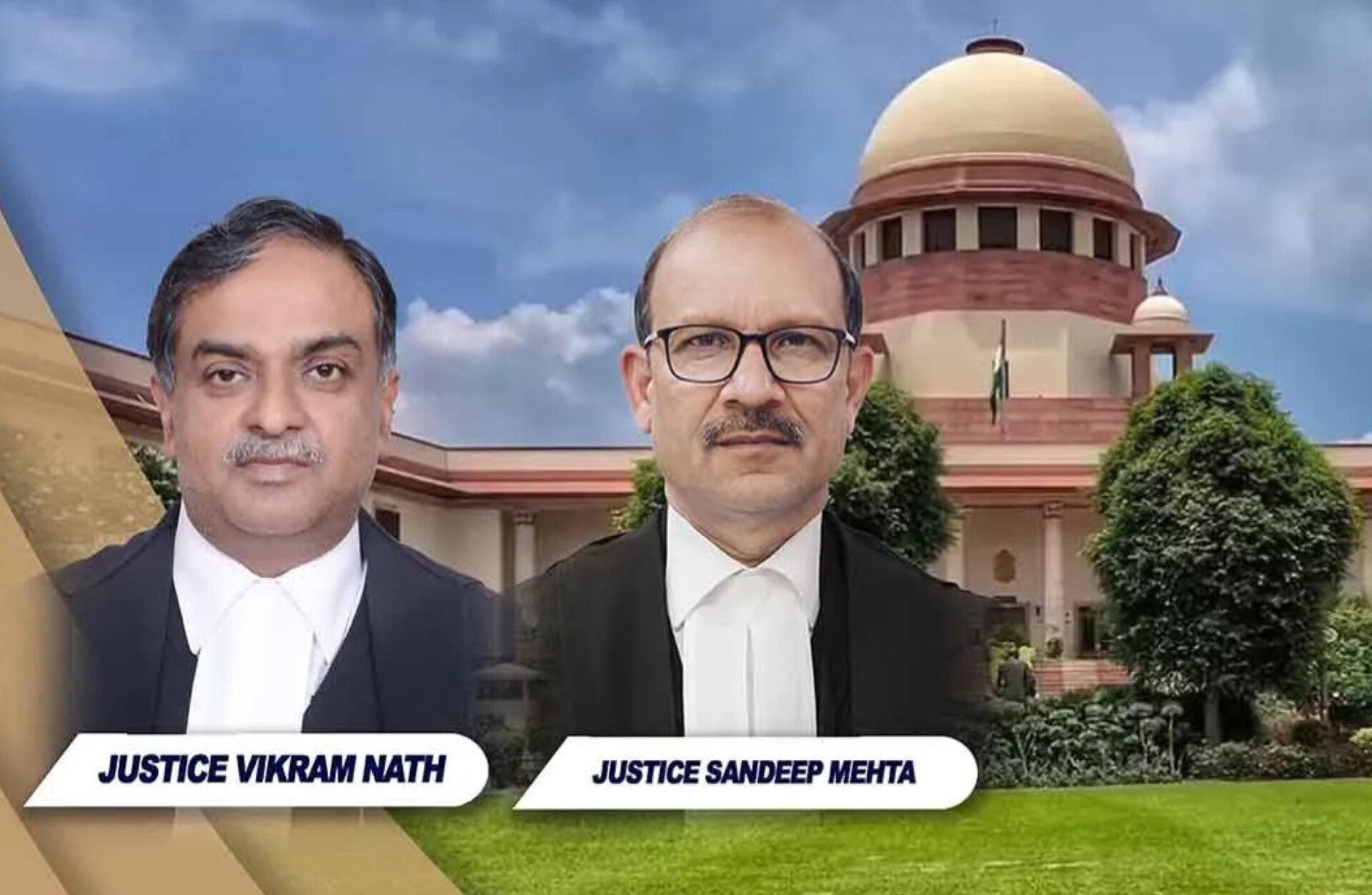
Bench of Justices Vikram Nath and Sandeep Mehta Heard the Matter
The matter was heard by a Bench comprising Justice Vikram Nath and Justice Sandeep Mehta.
The petition also challenged certain legal provisions governing the execution of death sentences. In particular, it raised objections to the procedure under which a condemned prisoner is hanged and remains subject to the process until death occurs.
Alternatives Used in Other Countries Also Discussed
During the proceedings, Project 39A also presented arguments concerning alternative methods of executing death sentences. The Court was apprised of methods used in other countries and the experiences associated with them.
At the same time, it was pointed out that the alternatives proposed in place of hanging also involve practical, medical and humanitarian challenges.
What Did the Central Government Say?
Attorney General R. Venkataramani, appearing for the Central Government, presented the government’s position before the Court. The Centre indicated that alternative methods of carrying out death sentences could be examined at the expert level.
This leaves open the possibility that the government may, in the future, study alternatives to hanging on the basis of scientific and medical considerations. However, the Supreme Court declined to declare the existing method of hanging unconstitutional at this stage.
Psychological Impact on the Executioner Also Discussed
The Supreme Court also considered the broader human aspects associated with the execution of a death sentence. During the hearing, the psychological impact of carrying out an execution on the executioner, or hangman, was also discussed.
The mental and psychological consequences for individuals involved in the execution process, along with other related humanitarian concerns, formed part of the Court’s consideration.
Hanging to Continue for Now
The key takeaway from the Supreme Court’s decision is that hanging will continue to remain the prescribed method of executing death sentences in India for the time being. The Court has not found the existing method unconstitutional.
At the same time, the judgment leaves the door open for the Central Government to explore alternative methods in the future. The government may consider other options after examining expert opinions and scientific and medical evidence concerning the manner in which capital punishment is carried out.
